Total Pageviews

Tuesday, June 12, 2012

Talking Commerce in Nicaragua - The Reluctant Psychoanalyst Gets the Business


An economics professor in our group commented that it is impossible to separate economics from politics and culture. He has gotten comments from his students that his classes contain too much of the latter and not enough of the former, but this trip has reaffirmed his commitment to teaching in the way that he does. Of course, I would add that we need to also include individual psychology in the mix.

The economy of Nicaragua is a mess. It is the second poorest country, in GDP and income, in the Western Hemisphere. It is also a tremendously rich country: in natural resources, raw agricultural assets, beauty, and the potential industry of its people.

Culturally, the country is divided in two with a line dividing east and west that separates the Spanish individualist culture on the Pacific side from the British/Indigenous/Creole collectivist culture on the Atlantic side. We were immersed in the Western culture and talked most about it. We were given a smattering of information about the east, but it was really the west that we looked at. The east is tremendously intriguing in terms of an opportunity to develop entirely new ways to think about building an economy. Much of the land is held in communal zones, and negotiating, managing, and motivating modern capital backed structures in that economy would be fascinating - as would understanding the psychology of such a culture, but we were given only a peak at it.

The economy in the west is a mess because of earthquakes, hurricanes, and corrupt leaders in the conservative, liberal, and revolutionary parties, but mostly it is a mess because of US economic and political strategies. The Monroe Doctrine, something that I read about when reading a biography of Monroe, and one that seemed benign at the time, involves a position on the part of the United States that the Western Hemisphere is the domain of the United States, not Europe, and we should be the dominant political, military and economic partner (though this term is problematic in power imbalanced relationships) of each of the Latin American, South American and, I suppose, Canadian countries.

This policy led, in Nicaragua, to the declaration of an American, William Walker, as president of the country in 1855. The marines conquered the country, Franklin Pierce recognized Walker, and Walker reintroduced slavery into the country before being run out in 1857. In the twentieth century, the marines returned, and they supported the repressive rule of the Somoza family from 1933 to 1979, when they were overthrown by the Sandinista revolution in 1979. The Sandinistas are named after Ernesto Sandino who opposed the marines and was ambushed and executed on the front steps of the president's palace by Somoza.

In the twentieth century, the Monroe Doctrine meant that we supported a government not of democracy - not one that is responsive to the people - but a government that ruled by repression of the poor and maintaining the loyalty of the rich by giving them favors, and increasing their wealth. This may well have been the dominant style of governing in the Central and South American countries during the twentieth century and into today, I don't know, but there seems to be consensus that this was the course in Nicaragua.

Nicaragua, despite being much poorer than its neighbors, is the safest of the Latin American countries. This is likely due to many factors (and your property is likely not safe in Nicaragua - burglar bars and razor wire are all over the place - but apparently to prevent theft, not harm; this is, after all, a very poor place), but perhaps the most important factor decreasing violence is that this is the only Latin American Country where the military and, by extension, the police are not trained by the US military. The military is the revolutionary army - the army of the people. Its mission is not to suppress the people but to protect them. This is a profoundly different mission than is the case in other Latin countries, and, because violence begets violence, those other countries are rife with gangs and other murderous elements - including the police and military. Of course, as the war on drugs drives the transport of South American drugs to the land routes, all bets may be off...

In this culture, though, individual responsibility for wealth creation and maintenance is minimal. We met, during our trip, with various groups trying to offset this with various strategies. We met with a grassroots group in Esteli that is working to provide micro-loans to urban and rural customers, to extend credit to individuals that are not served by banks who need credit to buy seed or to buy a home. To the south of Managua, in a town called Masaya, we met with a man who had secured a $250 micro-loan to purchase a potter's wheel, and who now has a thriving business. In the micro-lending office, all of the 18 employees were devoted to collecting the loans, but nine of them were devoted to this full time. The approach to loan collection that they used was a problem solving one. It involved establishing and maintaining a relationship with the lendee and helping him or her (51% of loans went to women) anticipate and solve loan payment problems, sometimes by offering expertise.

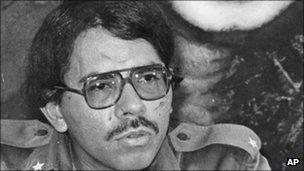
The biggest challenge currently was a "no-payer" movement that was started when Daniel Ortega - the current despot - promised, in an off the cuff campaign comment, that all loans would be forgiven if he were elected. He later, thankfully, reneged on this promise, but a group of people, a group of people who expect the government to provide resources directly rather than to regulate and manage the economy have taken the position that they don't need to repay loans: not only do they renege on obligations, they have gone so far as to firebomb lending offices to drive their position home (Okay, that does sound violent).

The positive effects of microlending include the palpable - a potter obtaining a wheel - but also something more subtle and potentially culture shifting - the idea of being responsible for an obligation - and the idea that capital can generate capital that can be used to increase wealth.

We met with a very interesting fellow who is working on the problem of not just generating wealth, but keeping that wealth in the hands of those who have generated it. To do this he has created co-operatives, which he describes as companies where the company is owned by workers, workers own the company (not the same thing), and where gross profit is necessary, but net profit isn't necessarily necessary (the share holders are all employees, so they have already profited from their salaries and net profit would be a bonus - nice but not necessary), so that long term planning can be undertaken. He is also working to eliminate middle men in delivering product - he wants to deliver the product directly to the distributor - and to create control over the entire production. He has set up a cotton farm that includes a cotton gin and that will ultimately include spinning the fiber, making the cloth and cutting it, so that he will have his own River Rouge plant - Henry Ford's experiment in turning raw materials into cars in one plant - in his back yard.

The driving engine behind this man's efforts, however, is not finding situations that need a solution and coming up with one - it is asking the locals what they want done and working with them to figure out how to do it. He gave examples of marvelous technologies that westerners have provided to Nicaraguans that they have not used - solar stoves, for instance. A solar stove seems to be a no brainer in equatorial Nicaragua, until you realize that most Nicaraguan women wake up at 4 am and put on a pot to simmer beans and rice while they get the family up and the day started. Oops. The sun isn't out at 4 am, the solar stove, when it is working, produces a hot fire, not one that lets things simmer and it needs to be tended, so it changes the whole lifestyle of the owner if they are to use it, so when the Westerners come back, the stove is being used to store wood for the fireplace.

But what was most surprising was that this message - the message of asking the locals what they want to do and partnering with them, not bullying them, was offered in a very different context; at the Chamber of Commerce. The Chamber of Commerce looks not at a micro level, but at a macro level to see how Nicaragua can improve the economy. A current hot topic here is waivers - a US government position that lets the world bank and others lend to Nicaragua contingent on such things as governmental transparency and repaying US citizens whose property has been nationalized. The US - and the chamber of commerce - are not pleased with the election in Nicaragua. Neither is pleased with the Chavez/Venezuela money flowing into the country without any statement about where it is going or whether it needs to be repaid.

If the US chooses to rescind the waivers, something they will announce on Monday, they will essentially be pressuring the country to get rid of Ortega and to do it now. Ortega will certainly resist. Without capital, this woefully poor country will be even more deeply thrust into an economic morass and the people will suffer. When they have suffered enough they will overthrow the government - that seems to be the logic.

The spokesman for the Chamber of Commerce, while recognizing that there were those in Nicaragua who want the US to put this kind of pressure on them, was profoundly opposed to it. He wants to get rid of Noriega desperately, but he wants to do that on Nicaragua's terms, not the US's. He wants the US as a concerned partner, not as the entity calling the shots (again). He wants the US's help, but does not want them to be pulling the strings as a condition of providing this help.

The position of empowering the little guy - offering aid, but making him responsible - was echoed from the micro to the macro level, and is certainly something that we experience in psychoanalytic practice - the patient wants and needs to be in control of their own destiny at the same time that they need our help. From the US position, Nicaragua may well be on the edge of defaulting on a loan - by not being transparent in ways that they have promised. This is a moment to, together, figure out how to address that problem. Nicaragua, despite being governed by a despot, is not repressing free speech. New elections should be held. Is it the US's job to insure that? Or is that something that the citizens should be demanding? Can we let the internal foment resolve? Or do we need to act? These are the kinds of questions that an analyst needs to ask as a patient, struggling to become more autonomous, nose dives back into a suicidal crisis after discovering a truth they have been unaware of. Can Nicaragua figure out how to solve the problem of Ortega, or do we need to send her to the hospital?

To access a narrative description of other posts on this site, link here.   For a subject based index, link here.

Additional posts about this trip to Nicaragua can be found here:
Anticipating Travel to a Third World Country  Preparing for Nicaragua
Fear and Loathing in Nicaragua First day in Nicaragua
In The Hall of the Incest King Daniel Noriega and Day two in Nicaragua
Mass in Nicaragua Day three in Nicaragua
Dora Maria Tellez Day four in Nicaragua
Talking with Peasants about Birth Control Day Five in Nicaragua
Nicaragua on the Couch Processing the trip as a whole

To subscribe to posts (which occur 2-3 times per month), if you are on a computer, hit the X button on the upper right of this screen and, on the subsequent screen, hover your cursor over the black line in the upper right area and choose the pop out box that says subscribe and then enter the information.  I'm sorry but I don't currently know how you can subscribe from a mobile device - hopefully you have a computer as well...


Talking with Peasants about Birth Control - The Reluctant Psychoanalyst goes to the Mountains of Nicaragua


Today, for the first time, I had a conversation with a person who called herself a peasant. Actually, our group had a conversation with a group of ten peasants.


Yesterday we drove into the mountains and spent the night in Esteli, a city of 125,000 that is a commercial hub for the northern part of this country. It is crowded, along the main drag, with shops that are tiny, crammed against each other, open to the street, and right next to the sidewalk, which is really quite narrow given all the foot traffic. This street ends in the main plaza in town and we stayed in a hotel half a block from the plaza.


Church on the Plaza of Esteli

This morning, we drove to the Offices of FEM, a Catholic Charity that serves the needs of women in the rural areas surrounding Esteli. After we picked up the director of the center, we drove an hour or more through spectacular scenery on less and less frequently travelled roads and talked with her about the work of this charity with the woman who ran it and who was leading us to meet with a group of women who have formed a coffee/bean/millet harvesting collective in a remote village in the mountains.


The woman described the work of her center, the primary goal of which is to help decrease the rates of violence against women, including femicide, by empowering women. The empowerment occurs through education, both about reproductive health and about agricultural practices, as well as through helping women to connect with and support each other.


I asked this woman, a woman with light brown mottled skin who speaks Spanish and no English, a woman who is in the later stages of middle age, a woman who has a high school education, a woman who is from the hill country and a woman who appeared to be quite at home with herself and with the area, how women who were devout Catholics practiced birth control. She stated that the peasants that we would meet love God. And they believe that God loves them. She stated that they believe that God wants them to care for themselves and to care for their bodies, and they realize that having multiple births is not good for their bodies, nor is it good for the children who deserve more attention and more resources than they will be able to devote to a large family. Ultimately, she stated, for women in the area, managing their reproductive health was an act of faith and completely consistent with worshipping and loving God.


There were many things that were remarkable about this interaction. First, the woman was much more articulate than I can capture in my paraphrase in the paragraph above. She was clear, simple, direct, but - I think I said it before - articulate; more so than this professor and psychoanalyst from the United States is able to be. Now, I think this was not the first time she addressed this question. As will become apparent later, she needs to help provide a rationale to a group of women who will depend - I think for their lives - on it. So I think it was a practiced response, but it was also spontaneous. She was not reciting something she had learned by rote. The second thing was the calmness of her demeanor. She was not defensive. She did not know my position - some white man from the north who was affiliated with a group of Catholics. Nor was she strident. She seemed to be simply certain. Finally, the interaction is remarkable because I, despite multiple examples to the contrary, expect that people that I meet in rural Nicaragua will not be careful and critical thinkers, they will not be be articulate, and they will not be able to be independent and autonomous - to think outside the box that the Papal church would draw around them.

We arrived at the women's collective. The journey was remarkable in that, as we went into more and more remote regions the road continued to be paved with cobblestones; to be wide flat and well maintained, with concrete gutters - even once the only traffic we saw was foot traffic with an occasional horse cart. This was the case until we turned off onto a dirt road leading up to the tiny village that was our destination. I suppose it should come as no surprise that Somoza owned the cobblestone factory. Nor should it come as a surprise that successive governments would invest in the roads as a means to employ people and to buy their votes, even when the citizens are living in shacks and the children are being neither properly fed nor educated.

But I digress. The women's collective, physically, was a concrete pad with a tin roof that we reached by walking 15 yards down a narrow path between two sets of barbed wire that marked properties on either side. The women were waiting for us and, unlike at other meetings, formed a receiving line, shaking our hand or hugging us as we arrived. We milled around for a bit while some of us used the latrine - which had a large poured concrete floor and throne and a very solidly built roof and walls. We set up chairs which we took out of the closet space at one of the two closed ends of the shelter and sat in a circle and the women talked about their experience.

The women explained that their collective, something that had had in place for 10 years and had 43 members, was central to their lives. The room that we were in, with a chalkboard on the wall and an additional portable chalk board, served them as a classroom. In this classroom, they learned, through work books, to name the parts of their bodies. They learned about reproductive processes and about reproductive health. They taught their children about this. One of the women was a teacher and, this part wasn't as clear as I wished, but I think she went off to three day workshops on these issues and came back, with work books, and taught the other women (and their children). This reminded me of the publication of the book "Our Bodies Our Selves" in the US in the early 70s which women used to take charge of their health, especially their reproductive health. The Nicaraguan women stated that starting with learning about their bodies served as an important basis for their feeling of empowerment and for helping them to start to work on protecting themselves from violence against them from men.

In addition, the women took more traditional classes. In fact, the oldest woman in the group, one of the founding members and a past president, was quite proud of having completed primary school and was now going on to complete her secondary school education. She said that children in the village made fun of her for still being in school, but she thought it important to continue to learn more about the world. English had been very difficult, she said, but they were now learning math and history, and that was easier. Many of the women walked considerable distances - and altitudes to come to the class.

As the discussion was drawing to a close, a member of the group, a devout and conscientious Catholic, asked about the relationship of the group to the church. The women said there is no relationship. The priest says that we are evil and doing the work of the devil. He says that because we talk about abortions, we should be shunned by the rest of the village.

I think we were all a bit stunned by her answer. It was certainly not the response the questioner had been expecting. And I think this answer created a new respect for what these women were doing. They were risking their lives - their connections with the community as a whole - in a place where there were no other viable options other than relying on each other - because of the intensity of their beliefs in the moral correctness of what they were engaged in. The courage of these women dwarfed that of even the revolutionaries.

Most of the women farm plots of ground that are about an acre in size. Many of them grow coffee on their very steeply mountainous land. They had a table set with bowls of their products, a lit candle and exotic flowers including an orchid. After the conversation, they served us a lunch of beans and rice, dried plantains, and fried eggs. It was delicious. We held hands and said a prayer before lunch, and I imagined that it is terribly important that these women know that they are linked with people outside their community - that they are not alone.

Those links come with a cost. One of the young women, a daughter of one of the other members, has completed her secondary education in accounting. She is beautiful, articulate, and expressed concern that those who had been trained in skills such as hers could not find employment in the area. I had the fantasy of "discovering" her and bringing her out, like an exotic flower, for the world to see. But I think she has grown beautiful in her fertile home soil and I don't know whether she can withstand the rigors of the modern world, a world without the networks that have sustained (and shunned) her.

I also worry that agribusiness, which would better exploit the rich soil, sun, and water of this country, will eliminate rural hamlets such as this. This is a small place that is evolving, by fits and starts, to belong both to an ancient and to the modern world. If these women were to migrate to the city, their standard of living - the beauty of it - would suffer tremendously. In the mountains they are poor. But they live in paradise and, even if parts of the village won't have them, they have each other.


To access a narrative description of other posts on this site, link here.   For a subject based index, link here.

Additional posts about this trip to Nicaragua can be found here:
Anticipating Travel to a Third World Country  Preparing for Nicaragua
Fear and Loathing in Nicaragua First day in Nicaragua
In The Hall of the Incest King Daniel Noriega and Day two in Nicaragua
Mass in Nicaragua Day three in Nicaragua
Dora Maria Tellez Day four in Nicaragua
Talking Business in Nicaragua Day Six in Nicaragua
Nicaragua on the Couch Processing the trip as a whole

To subscribe to posts (which occur 2-3 times per month), if you are on a computer, hit the X button on the upper right of this screen and, on the subsequent screen, hover your cursor over the black line in the upper right area and choose the pop out box that says subscribe and then enter the information.  I'm sorry but I don't currently know how you can subscribe from a mobile device - hopefully you have a computer as well...


Wednesday, June 6, 2012

Meeting Dora Maria Tellez, a Politician with Integrity - It could only happen to the Reluctant Psychoanalyst in Nicaragua!


This morning we met with Dora Maria Tellez, a remarkable woman. She went underground when she was a medical student in the 70s and was second in command of the Sandinista Military when she re-emerged and they surrounded and held hostage the National Assembly while it was in session during the Revolution in 1979. She was the minister of health in the first Sandinista government. She ran that ministry with integrity and organized it to deliver on its mission. After the transition in power, the person from the other party who followed her into office praised her for the state of the ministry. She has broken with Daniel Ortega, the first Sandinistan president, who was voted out of office in 1990, re-elected in 2007, and just stole a second consecutive election (consecutive terms are not allowed in the constitution, so even his running was a violation of the contract with the people) last November. She started her own liberal party that is dedicated not just to the issues of the poor, but also to the ideals of democracy when she realized that Ortega had become a despot and had lost track of the idea that the people should decide what is in their best interest.


National Assembly Building

Dora Maria is slender, almost wiry, and she has salt and pepper close cropped hair that looks very easy to care for. She wears rimless glasses and no make-up. She sat in a circle with the seventeen of us at an outdoor cafe. We did not meet at the offices of our hosts because they are about two blocks from Daniel Ortega's house within an area that is guarded by police. It would be complicated to explain what she was doing there, so we went to see her. The Cafe was on a busy street. We were to go to the air conditioned room, but some people were using it, so we sat on the outside terrace next to a very busy side street with trucks and motorcycles noisily going by, and at one point, a vehicle with a loudspeaker blaring drove past.

Dora Maria started by giving a broad brush history of Nicaragua and condemning Daniel Ortega for subverting the democratic process. She then asked us to give her questions - and to give them to her all at once. She was the second presenter on this trip who did that and, like the first, she wrote down all the questions and then spoke for 45 minutes, masterfully weaving together the apparently disparate questions into a synthetic response that was a masterpiece.

She started by addressing a question of how Daniel Ortega, who fought for democratic elections and a pluralistic, inclusive process could have become a despot. Her response was that the interesting question is not how he became a despot, but how could he not? She started by talking about personal character and cited Nelson Mandela and George Washington as being the exceptional people who did not crown themselves king when they could have. She acknowledged that Daniel Ortega was pulling the political levers and weaving power for himself within the party from the beginning and that he was now doing the same thing outside the party. She cited the corrupting influence of Two Billion Dollars over the course of the past five years that Hugo Chavez, head of Venezuela who is flush with oil money, has given Ortega for discretionary spending (The entire exports of Nicaragua in a year are about two billion dollars). Ortega has used this huge amount of money to build an empire for his family and to buy votes to consolidate his power.

Dora Maria characterized people like Hugo Chavez and Fidel Castro, and by extension Daniel Ortega, as people who believe that the world begins and ends with them. They don't engage in succession planning because they cannot envision a world without them in it. This is an interesting kind of immortality. And, paradoxically, it will keep these men from the kind of immortality that George Washington and Nelson Mandela - leaders who will be remembered long after Chavez, Ortega and even Castro are historical footnotes. And Washington and Mandela achieved immortality by giving up power rather than by hanging onto it.

She went on to talk about how the culture of Nicaragua invites and supports despotism; it is a country where power politics has been the norm, and he played to form. Dora Maria was very critical of the culture that supports this and she sees it as arising from within the diocesan Catholic world that is loyal to the church, regardless of the qualities - good, bad, or heinous - of the priest. She espoused a vision of the Protestant Churches as being places where congregants can choose where to worship, and if they don't like the priest, they go elsewhere. Now this view, from my perspective, leaves out the positive cultural consequences of the Catholic structure and values. In particular, it glosses over the stable family structure that supports what is predominantly a culture of happiness - of course there are also huge costs associated with that stability. Dora Maria, however, when told that she has betrayed her President, replies that she never promised loyalty to a person, which is how politics is built in this culture, but to ideas, to concepts. If any person is no longer loyal to those ideas, she is no longer a colleague of that person, nor can she be personally loyal to him.

You might think that, after addressing the issue of Ortega, she would be depressed about the future of her country. Far from it - she is incredibly hopeful. Her view of the movement towards democracy is that it is like a river - it meanders. And there are moments when the river actually runs away from the goal. And this is one of those moments. But she is heartened by the young people, people who are educated and ready to take on power. Women among that generation who are getting the necessary support from their husbands, a new phenomenon, and one she feels is incredibly enlightening.

She said that the most important political tactic is tenacity. When they knock you down, you need to bounce back up, like a Bobo doll. Don't complain about the defeat, focus on the next task. Keep working towards your goals and you will succeed, the River will finally arrive at the destination - in her case, a democratic state.

Dora Maria went on to speak about many other things, but when she had addressed the questions we posed, a member of the group invited her to tell us why she decided to go underground as a 19 or 20 year old girl. Dora Maria paused, and then she told us of being raised, with her brother, by her father, who worked one and one half blocks from their home, and by her mother, who worked as a seamstress in her home, and she told of eating breakfast, lunch, and dinner together every day in her childhood and talking during those meals. Her father was knowledgeable and taught her about the world. He encouraged both children to go to University and study whatever they wanted to, and to enter into a profession, not to become rich, but to earn enough that they could be autonomous and would not have to compromise themselves in order to keep their work. Her mother, a devoutly Catholic woman, taught her to be concerned about those who had less than she.

We also asked her whether she was afraid. Afterward, we agreed that we were afraid as we were speaking with her. We were in a very open space, with people walking in and out to place orders and people drove and walked by while she criticized the despot in office. She stated in response, "No one wants to die. But when your fear prevents you from talking, they have won." She takes precautions, not keeping to a set schedule, etc., but when a man called and threatened to blow her up, she said that she responded, "Send me your fax number and I will send my schedule so that you will know where I will be and can do that more easily." Essentially telling him, tell me who you are and I will cooperate. She received no more calls. She said, never tell a bully when he has hurt you because he will use that information to hurt you again.

My sense is that, when the river that is Nicaragua gets further down the path towards democracy, they will do well to have a president like Dora Maria. She is not interested in having power, but in creating a government that can empower the people. I believe, and I think it is possible that she would agree, that the country is not yet ready for such a leader. I know that I hope that they are evolving to the point where they would be able to elect such a leader.

To access a narrative description of other posts on this site, link here.   For a subject based index, link here.

Additional posts about this trip to Nicaragua can be found here:
Anticipating Travel to a Third World Country  Preparing for Nicaragua
Fear and Loathing in Nicaragua First day in Nicaragua
In The Hall of the Incest King Daniel Noriega and Day two in Nicaragua
Mass in Nicaragua Day three in Nicaragua
Talking with Peasants about Birth Control Day Five in Nicaragua
Talking Business in Nicaragua Day Six in Nicaragua
Nicaragua on the Couch Processing the trip as a whole

To subscribe to posts (which occur 2-3 times per month), if you are on a computer, hit the X button on the upper right of this screen and, on the subsequent screen, hover your cursor over the black line in the upper right area and choose the pop out box that says subscribe and then enter the information.  I'm sorry but I don't currently know how you can subscribe from a mobile device - hopefully you have a computer as well...


Monday, June 4, 2012

Thank God for Some Priests! - The Reluctant Psychoanalyst goes to Mass

Tonight I took communion at a Catholic mass for the second time in my life. As I have blogged before, the first time was a mistake. I assumed when invited that the Catholic Church, like the Episcopal Church, accepted all in the communion ceremony. Not so, I discovered afterwards, much to my chagrin. I am glad that I did it, however. My then twelve year old son went to Mass shortly after that with his mother - a mass to celebrate the anniversary of his Catholic grandfather's death. John, as naive as I, and recognizing the ceremony because it so closely mirrored the Episcopal communion, participated in it. But then he was told (as I discovered on a web sight after my gaffe) that Catholics do not offer mass to non-Catholics to prevent them from going to hell. The logic, such as it is, being that not believing in the substantiation, non-Catholic believers would be damned for not strictly following the rite. I was glad to be able to inform John that I would be right there beside him if that turned out to be the case.


Tonight we went to mass. An open air mass in one of the many poor parts of Managua - at a center that has a large outdoor sanctuary covered with a tin roof and with a mural at the head of the sanctuary that depicts the revolution. The center also has classrooms and other spaces that support the teaching of music, dance, and computer skills for little or no cost to the neighborhood children. The choir for the mass played the instruments they had learned at the school - guitar, marimba, and recorder, and sang beautifully - wonderful, joyful folk songs with soaring melodies and punctuated, in the final song, by gleeful and spontaneous shouts as the congregation clapped along.

But it was the homily that got me. The priest, preaching in a poor neighborhood in Managua, taught a sophisticated lesson that started out by describing the feast of the trinity, which we were celebrating, as an important part of the pedagogy of the church - a structure he explained, that distinguished the Roman Catholic liturgy from that of the Evangelicals (a group, we had been told earlier in the day, that has grown from 10% of the Nicaraguan population - the other 90% of whom used to be Catholic 30 years ago - to 30 or 35% today). He then went on to explain that the trinity, which is a very hard concept to understand, was the result of a reconciliation between a group of heresies in the fourth century and therefore does not fit neatly into the church calendar of lent, christmas, easter, etc. that St. Paul had developed.

As he started to describe God the father, he started to get delightfully derailed. He explained that God the father needs to be considered God the mother because of all the maternal aspects of God - that God the mother and father - Oh, and while he's on the subject, Nicaragua's mother's day (celebrated two days ago) and the month long lead up to it - with all the imploring of people to buy gifts for their mothers - must be an indication of the tremendous guilt that Nicaraguans feel towards their Mothers. (He went on about this for significantly longer than I am going to devote to it here, but let it be known that this intriguing, psychoanalytically rich insight was just a prelude... and that it indicated that thoughtful people here recognize and articulate the contradictions in the culture - that they are attuned to their local collective unconscious and are not afraid to speak about it.) He eventually noted that he might get off the track if he continued (Indeed he already had, but thank God for that).

He then argued, quite cogently, that a maternal God needs to love all those that he has created. He cited the cardinal who chose not to be the present pope, an Italian cardinal who, because he had Parkinson's stepped aside in the most recent election. But this Cardinal, whose Parkinson's is so advanced he is in a wheelchair, confronted the Pope within the past week when the Pope came to his city, saying to him that in this, the fiftieth year of Vatican II, we need to be reshaping the church in the ways that Vatican II should have done - to reshape it structurally - that this could have avoided a series of recent scandals in the Vatican (here, my colleagues informed me, he was likely referring to some shady Vatican bank dealings). Further the Cardinal, and by extension, the priest, maintained that this maternal God is surely embracing homosexuals. And that the Church should be managing the relationships between homosexuals by sanctioning/sanctifying their relationships - not turning their backs on them and their wish to express their love! He was saying this in Managua! In front of God and whoever might walk by this Church! Why is this not being talked about in my country - the home of the free and the brave?

He then went on to say that the Trinity was a way of integrating aspects of God that are inconsistent with each other but necessarily integral - his second analytic insight of the night. An insight about the functioning of a Deity that reflects the functioning of the people that we see in analysis (and in life more generally), the people like Daniel Ortega, about whom I blogged yesterday, who are apparently incredibly internally inconsistent, and yet still human. But then the priest offered an integrative interpretation of the trinity that could be characterized in this way: Don't sweat the small stuff. God is about love. And love is about community. You cannot love in isolation, you must be in community with those around you. Connect, love.

He then invited all to come to communion. I came. Not just in solidarity with my son, but with all the people in this parish, and with all the people within the church who recognize that the Pope, though burdened with the leadership of the Church, is still human. He is internally divided. He, though he may not know it, is uncertain. And the Church, which is of the people, needs to be in communion with those people. And those people are a vast complex people who are struggling, despite and through their complexity, to do a simple thing - to love - a simple thing that, because of our complexity, is very difficult to do. And the church should help us facilitate the expression of that love. By embracing and explaining our complexity - by growing with us as we learn more and more about that complexity - wrestling alongside us as we explore a vast unknown area that is exciting and new - the Church should not be retreating behind platitudes and trying to return to a simplified world view that worked in the past but is no longer capable of keeping up in its prior form with a world that is evolving. This priest, it seems to me, is standing in front of his congregation and struggling - along with them, not at them - to understand this evolving world. I felt privileged to be in communion with he and his congregation.

In fact, I want this priest to come to America, to take over the presidency of my Jesuit University, and - even if he is a little scattered - not nearly as smooth or polished as my own president - I want him to take on the bishop. To tell him that it is love - not rules - that should guide this - and every other Catholic organization. If we agree on that, we can work on figuring out the details - and recognize that we will make mistakes along the way.

What is remarkable to me is that this sophisticated, if scattered, argument is being made before a group of people that has lived and breathed scandal, corruption, the failings of their heroes, but also the need to have a relationship with heroes whose feet are deep in layers of muck, that allow the principles - including the ability to call the heroes out - to be expressed. This is a chaotic, economically poor, but spiritually and politically rich and complicated nation that is worthy of our attention. This is a priest and a people who are not afraid of hell, because they have lived through it. Unlike the president of my University, who would martyr himself before the faculty and staff to serve the Pope, this priest is willing to martyr himself to the Pope to serve his people. That is a priest I can understand, resonate with, and fear for.

Post script: After writing this, I wondered whether it is the president of my University that I am angry with or whether it is myself. Whether I am complacent and therefore not articulating the complexity of what I am confronted with in my lived life. It is, perhaps, in addition to my president, I myself who does not have the courage to be as articulate as this priest and to publicly wrestle with the complexities of life.

To access a narrative description of other posts on this site, link here.   For a subject based index, link here.

Additional posts about this trip to Nicaragua can be found here:
Anticipating Travel to a Third World Country  Preparing for Nicaragua
Fear and Loathing in Nicaragua First day in Nicaragua
In The Hall of the Incest King Daniel Noriega and Day two in Nicaragua
Dora Maria Tellez Day four in Nicaragua
Talking with Peasants about Birth Control Day Five in Nicaragua
Talking Business in Nicaragua Day Six in Nicaragua
Nicaragua on the Couch Processing the trip as a whole


To subscribe to posts (which occur 2-3 times per month), if you are on a computer, hit the X button on the upper right of this screen and, on the subsequent screen, hover your cursor over the black line in the upper right area and choose the pop out box that says subscribe and then enter the information.  I'm sorry but I don't currently know how you can subscribe from a mobile device - hopefully you have a computer as well...


In the Hall of the Incest King - The Reluctant Psychoanalyst Travels to Nicaragua (cont.)


Among the many things I learned yesterday - and what a lot I learned and what a lot there is left to learn - I find myself ruminating about an apparently relatively recent bit of news. Daniel Ortega, the ruler of this country, the leader of a profoundly democratic and well thought out revolution that exploited longstanding internal divisions between the ruling powers to create a voice for the oppressed poor majority in this country; a voice that he still believes he is articulating, despite the fact that he has subverted the democratic ideals that propelled him to office; this man has been publicly accused by his daughter of committing incest. Not only has he been accused, he has been taken to court, where he promoted the judge who ruled that the statute of limitations has expired on his incestuous crimes, thus freeing him from penalty, but not from guilt, to the supreme court immediately after that ruling. He has publicly reconciled with his daughter, but it is a broadly known "truth" that the leader of this country is what we would call an incest perpetrator in our country and it is not hard to connect the dots that the checks and balances in this country are owned by one man - a man who, despite his one time ideals and vision, has become a despot.

Now, are sexual peccadilloes an anomaly among politicians? Of course not. Our own president Clinton is a public example of sexually inappropriate behavior that is likely wide spread among those drawn to the combination of power and human engagement that politics offers. But is there something to be learned from the perspective of the particular sexual actions of a country's leader?

Incest has been a taboo since at least the time of Oedipus. Freud famously suggested that this was because of the powerful incestuous wishes of the infant and the need to guard against those. Of course he has also been pilloried for this because, as revolutionary and unsettling as this idea is, it has been seen to be a way of denying the incestuous wishes and actions of parents, something that others have argued Freud never denied - he simply shifted his focus. In any case, the power of Freud's contribution continues to be that incest needs to be guarded against because it is so powerfully desired. But it also needs to be guarded against because it is destructive.

In our culture, incest offenders fall into three large groups. There are those, a relatively small subgroup, who are truly and primarily attracted to children. This is a small subset and their treatment involves helping them, essentially, to swear off sex. A difficult but important behavioral change. Another small group are elderly offenders - generally grandparents - whose age related decrements in inhibition have caused them to engage in behaviors they feel contrite about and have no intention of continuing. For them, helping them to figure out how to safely be with their grandchildren - to always have supervision and to avoid stimulating physical contact - is the primary treatment.

The majority of offenders are what we term "regressed" offenders. They are individuals whose primary sexual interest objects are adults and who, usually under some kind of powerful psychological strain, turn to an available - and loved - object as a means of sexual but also emotional gratification. This heterogenous group of individuals use a variety of means to justify their behaviors - to themselves and to their children. They know that what they are doing is wrong - they work hard to keep it hidden and, at least in our culture, they feel deeply guilty or ashamed of their behavior. They generally don't seek treatment, but, when remanded for treatment, they greatly appreciate it and respond remarkably well to it.

You may be somewhat surprised by the last comment - I know that when my internship director told me that everyone on the internship had to work with sex offenders I was skeptical. He said that most interns initially objected but that, by the end of the year, the interns found offenders to be among the most gratifying populations to work with. My experience was consistent with this - the individuals in the group that I worked with were genuinely hungry to change. They were, like all patients, resistant to such change, but they were generally deeply hurt people themselves who frequently convinced themselves that they were offering their children - usually their daughters - a kind of closeness they had never had and craved. Treatment offered them a psychological closeness and understanding - they were able to learn to empathize more authentically with themselves, to discover what they were emotionally hungry for and how to satiate that through mature relationships, which led them, in turn, to more authentically empathize with others, including their children, and they learned to connect with their children - to realize that what they did was harmful and to seek some sort of reconciliation.

I do not pretend to know what motivates a political leader who is attempting to redress the concerns of the poor and oppressed in his country to have sex with his daughter on a regular basis across a number of years. Nor can I, as an outside observer, understand the impact on the collective psyche of a country to know that their leader has been accused, but never acknowledged, owned, or made reparations for his actions. He has used his power to attack the women's groups who questioned him and his behavior. I do also know that 15% or so of accusations in our culture end up being fabrications and I cannot know of his guilt. But I do know that in a culture where the rights of women have been subjugated to the goals of the revolution, a violation of this magnitude that was dismissed by the courts on a technicality must shape and reflect the very soul of this place.

I think that this particular piece of news, by the way, resonated so strongly because I have been very much taken by the story of the revolution in Nicaragua. The army here - which is all but invisible (something not seen in the rest of central America) is the only army in Latin America - besides Cuba - that is not trained by the US army. And I think because of this, the military - and the police - function from an emic -meaning within the culture - rather than an etic - outside the culture - perspective. The military (and the police) function to protect the people rather than to suppress them - therefore there are far fewer of them and there is much less violence in this country than in the rest of Latin American (with the exception of Cuba, which is, apparently, similarly non violent).

This Sandinista movement, headed by Ortega, as the first order of business after the revolution and securing power, shut the schools and took all the literate people to the mountains for five months to teach those who were illiterate. The illiteracy rate went from 50% to about 12 % - in Ortega's first year of office! (That said, I think this figure is based on the Spanish heritage half of the country on the Pacific side.  The indigenous people's to the east, who live a more agrarian lifestyle on the other side of those mountains, were not, I think, included in this census).

I so want to embrace this movement, this country, and this man, but the tolerance of his behavior - the failure to examine and, if appropriate, to address his behavior, is beyond me.

To access a narrative description of other posts on this site, link here.   For a subject based index, link here.

Additional posts about this trip to Nicaragua can be found here:
Anticipating Travel to a Third World Country  Preparing for Nicaragua
Fear and Loathing in Nicaragua First day in Nicaragua
Mass in Nicaragua Day three in Nicaragua
Dora Maria Tellez Day four in Nicaragua
Talking with Peasants about Birth Control Day Five in Nicaragua
Talking Business in Nicaragua Day Six in Nicaragua
Nicaragua on the Couch Processing the trip as a whole

To subscribe to posts (which occur 2-3 times per month), if you are on a computer, hit the X button on the upper right of this screen and, on the subsequent screen, hover your cursor over the black line in the upper right area and choose the pop out box that says subscribe and then enter the information.  I'm sorry but I don't currently know how you can subscribe from a mobile device - hopefully you have a computer as well...


Fear and Loathing in Managua - The Reluctant Psychoanalyst Travels to Nicaragua


Some preliminary answers to the questions of my fear of being in Nicaragua arose in the night. We landed and were greeted by Kathy, our tour director, and came to the hotel - a very nice, if somewhat Spartan, Spanish style place built around central courtyards. As one of the members commented, it is like the fake courtyards in the Marriotts at home - except that, in addition to being real, it is open to the sky.

In any case, I had a series of pleasant dreams about talking with people - or more accurately listening to them. People in a country telling their stories, and many of the people were children. As I awoke, I realized that some of my fear is tied up in my guilt about hearing these stories - of living vicariously through the lives of others as I did with my friend Armando. Armando died a little over a year ago. I have written about him elsewhere, but what was salient this morning is a sense of guilt.

Armando was a very angry and proud man who loathed and loved himself and others with an intensity that was awe inspiring but it could be challenging, to say the least, to be the object of both his love but also other powerful feelings. His father, who had taken his wife and five children from Mexico to Gary, Indiana to work in the steel mills so that he could pay for his younger siblings to go to college, killed himself when Armando was a teenager.

Armando deeply loved his father and his heritage. He was fiercely proud of all things Hispanic. I think her was also really angry at his father for bailing on him. I think he revered him and expected him to continue to be there as a model for him. Who wouldn't have.

I learned a great deal from Armando - including and perhaps especially about the level of love and hatred that one friend can have for another. I think he hated me for having a life that reeked of privilege, and I hated him because his disdain for me was not something I could shake. My own self loathing found a mirror in his loathing of me. My own anger at my father, and therefore at myself, for abandoning me in much more subtle but certainly damaging ways got played out in Armando's hatred of me - but with a twist. Because he also clearly loved me, I was willing - indeed desperately wanted - to be with him. And, on a much less complicated level, he was really fun to be with.

I also feel tremendous guilt towards Armando. As potent as my self loathing was it did not hold a candle to his. Despite his generosity of spirit and his true appreciation of life and especially people, Armando was profoundly unhappy. I think I felt guilty for not being able to ameliorate that self hatred. More specifically, though, I feel guilty because, when he became ill with cancer, I did not go and nurse him. I offered - he refused, but I should have gone anyway. I think he was both appreciative of my offer to help, but also embarrassed that he should be in a position of need. I think he may also have felt, on a much less articulable level, that he did not deserve to be helped.


On the ride in from the airport, we heard about the part of the old downtown that was destroyed by an earthquake in 1972. Somoza pocketed the international aid money intended to rebuild Managua and he put barbed wire around the rubble, requiring those who wanted to rebuild to buy land on the outskirts of town - land that belonged to him. This contributed to the discontent that lead to the Sandinista revolution of 1979. After passing this, we drove through the part of town that Somoza bombed as part of his effort to quell the resulting revolution. When I read about Assad murdering the people of Syria, it feels remote and abstract. Peering into the homes of people living in sheet metal fabricated homes that stand among forty year old rubble feels real and concrete.

At the airport, as we waited for the rest of our group to arrive, I sat in our bus with one of the other members of our group. I noticed a billboard for the Avengers - a film that both of us had seen with our sons. I wondered a bit about the appeal of that film here. After the trip home, I imagined that there might be a far greater understanding of the destruction of New York depicted in that film than we, perhaps with the exception of some who survived 9/11, can appreciate. My companion noted that he and his son agreed that the great figure in that film is the Hulk. The anger, and the power of his anger is impressive. And I think we may all resonate with the terrible destructive urge that can be unleashed within us. As a US citizen, I am an ally of Somoza. Perhaps some of my fear of being in this foreign land is the fear that the anger of an oppressed people will be directed at me.

Certainly Armando was angry at me for being, in his words, a "corn fed honky." He felt that he had been dealt a raw hand and that I just didn't get that. I wanted to understand his experience, and that was a double edged sword - I think for both of us. For me, it involved better understanding myself in relationship to men like Armando - meaning men like my father. This meant that I was exploiting him in ways that I was at best marginally conscious of. For him, having a honky want to get to know him gratified him, but also meant that he was exposing himself to the enemy, and this was a dangerous, or even shameful engagement.

When Armando died, he did so largely in secret. He had a relapse of his cancer shortly before his death. He told very few people about it, and gave as his rationale to those he did tell that he didn't want to disappoint those of us he did not tell. There is something about his machismo - something about his pride - that is both admirable and frustrating. I never figured out how to simply be with him. To enjoy and appreciate him, but also to figure out how to avoid getting caught up in the complications.

One of the reasons, then, that I may be dreading engaging with Nicaragua is that it may end up mirroring the aspects of the relationship with Armando that I found most personally troubling. I may be fearing that I, as a witness to the Nicaraguan's poverty and other difficulties, will invite from them the critical attacks that my care for Armando seemed to elicit.

As I articulate this, it becomes clear to me that, in so far as all of the above is the case, it is, as we like to say in my trade, neurotic, and that while there may be good reasons to fear Nicaragua, this particular dynamic is unlikely to be played out with the people's of this nation.... but we shall see....

To access a narrative description of other posts on this site, link here.   For a subject based index, link here.

Other posts about this Nicaraguan trip can be accessed here:
Anticipating Travel to a Third World Country  Preparing for Nicaragua
In The Hall of the Incest King Daniel Noriega and Day two in Nicaragua
Mass in Nicaragua Day three in Nicaragua
Dora Maria Tellez Day four in Nicaragua
Talking with Peasants about Birth Control Day Five in Nicaragua
Talking Business in Nicaragua Day Six in Nicaragua
Nicaragua on the Couch Processing the trip as a whole

To subscribe to posts (which occur 2-3 times per month), if you are on a computer, hit the X button on the upper right of this screen and, on the subsequent screen, hover your cursor over the black line in the upper right area and choose the pop out box that says subscribe and then enter the information.  I'm sorry but I don't currently know how you can subscribe from a mobile device - hopefully you have a computer as well...


Saturday, June 2, 2012

Anticipating Travel to a Third World Country - The Reluctant Psychoanalyst Prepares for Nicaragua


Travel is usually something I look forward to. New sights, people and experiences engender a certain manic drive. I need less sleep, I become hyper-organized as I try to figure out how to get the most out of a city, state or country within a given amount of time, and my enthusiasm can be a bit off putting to those I am traveling with who may want to simply relax and see what's there to be seen.

Most of my travel has been domestic. Usually I have driven to new places. There are exceptions - I flew to Europe with my grandmother and same aged cousin when I was twelve and I wandered Mexico by train and bus shortly after graduating from college. But preparing for this Jesuit inspired trip to Nicaragua has been a very different experience. I have been scared. Excited? Well maybe, but primarily scared.

Nicaragua is a Central American country that the state department characterizes as the poorest in the Western Hemisphere. I find that hard to believe - Haiti has got to be poorer - but it is poor, thus the reason for the trip. I am a member of the Ignatian Colleagues Program, an effort on the part of the 28 Jesuit Colleges and Universities in the US to help lay administrators and faculty understand what it means to be Jesuit.  Since there are fewer fewer priests, the Jesuit Identity of the Schools is increasingly entrusted to lay hands. Nicaragua, in addition to being poor, is also a post revolutionary state with a dictator, a former revolutionary, who rigs the elections to stay in power. I anticipate being the Gringo from up north - a foreigner in a foreign land (perhaps a little bit of how I feel as an agnostic at a Jesuit Catholic Institution).

Part of my fear comes from feeling out of control of the trip. This is not a trip that I planned - and it is with a group of people I do not know - faculty members from 12 or so other colleges and universities. That was true of the trip to Europe, when we went with a tour group, but actually, now that I think about it, my grandmother made sure to include my cousin and I in the planning - we chose the countries and worked on a list of things that we wanted to see in each city. So part of it may be a sense of loss of control. This was planned by someone else - but so was the initial retreat for this thing - we went to some retreat center in way western suburban Chicago and I wasn't worried about that in the least. It was a mild irritant to take time away from family and work, but I wasn't scared. Control is not all of the answer.

Some of the fear comes from talking with one of the guys with whom I play basketball. He used to live in Venezuela and he experienced that as a terrifically violent place; so much so that he wouldn't return, and his belief is that Central America is much worse. He has expressed genuine concern (and given me spanish lessons), which has been both very touching and somewhat unsettling. He is most decidedly not a wimpy guy and he is not prone to maudlin displays of affection.

But my fear predates the interaction with my basketball buddy. It is partially a fear of violence, but it is also a fear of illness. I got shots three months ago, but have been worried about malaria, deng, and everything from the touristas to some kind of bacterial crud. The environment in the form of the sun has also been promoted as a potential harm agent - one of my fellow travelers claimed in an email that permanent retinal damage can be done in just a few minutes. Certainly, as a fair skinned Gringo, I am also concerned about sunburn.

As reasonable (or unreasonable) as all of the above fears are, I don't think they are the heart of the matter. Oh, they are very real. This week I wrote up a quick and dirty will - something that I have been meaning to get to in a more formal sense with a lawyer for some time - but I did it because I fear that I won't return from this trip.

But I think the heart of the fear is something different. I am going to meet people who are not like me. They are poor - some of them live at the Managua dump - and they are revolutionaries - we will be meeting Sandinista guerrillas who were fighting, among others, Ollie North's armed Contra army - and I am scared to engage with them. I am scared that they will infect me. That they will contaminate me. With ideas? Perhaps. I don't know. The feeling is visceral - it feels deeply and powerfully determined. And therefore its source is difficult to apprehend.

Another component of my fear has to do with my sense of privilege. In addition to dying, I fear being robbed. I have left my rings and watch at home, along with my wallet. I am wearing a money belt and have made copies of my passport in case it is stolen. While this fear may be somewhat reality based - it turns out that Nicaragua is the safest Central American country, but there is a lot of petty theft. But I think I fear being rich. Having power. Knowing that my freedom is not shared by all, but is something rare and special. I like living in my cocoon worrying about whether I will be able to afford Ivy League Schools should my kids be lucky enough to get into them - worrying about a birth control policy that doesn't personally affect me, worrying about whether I can leave the University and survive in private practice.

Survive. I have always felt myself on some primitive and not reality based level to be in survival mode. Where will my next meal come from? This comes, I suppose, at least in part from being the child of parents who were depression era kids and squoze every penny when I was a kid.  Well, I'm going to be meeting people for whom that is a legitimate current question. Will that give the lie to my experience? Am I, as my friend who travels in Central America a lot, the weenie she accuses me of being for my fear of traveling in this safest of Central American countries, but for a host of reasons she (and I) can only guess at?

Today has been an interesting day. My bug juice and sun block were confiscated at the airport. I put them in the carry on luggage because they were so important to have that I didn't want to lose them if my suitcase was lost, not thinking that they were in containers that were too big for Federal regulations (the terrorists won again today). So I found some sun screen and some insect repellant at exorbitant prices in the airport. I spent as much as I would have were I to have checked the bag, which the Federal agent told me was the only way to keep the goop.

But there is also a strange sense of freedom. I'm not carrying a wallet, which gives me pause when I don't feel its bulge in my back pocket, I'm not carrying a cell phone or keys. I have met a few people getting around the airport in Atlanta who have told me about their lived experience of the revolution. I am still scared of bugs and thugs and whatever it is on the floor that makes them recommend that you always wear sandals, even in your hotel room, but I also feel a bit excited as we descend through the night towards Managua.


To access a narrative description of other posts on this site, link here.   For a subject based index, link here.

To access additional posts about this trip to Nicaragua see:
Fear and Loathing in Nicaragua First day in Nicaragua
In The Hall of the Incest King Daniel Noriega and Day two in Nicaragua
Mass in Nicaragua Day three in Nicaragua
Dora Maria Tellez Day four in Nicaragua
Talking with Peasants about Birth Control Day Five in Nicaragua
Talking Business in Nicaragua Day Six in Nicaragua
Nicaragua on the Couch Processing the trip as a whole

To subscribe to posts (which occur 2-3 times per month), if you are on a computer, hit the X button on the upper right of this screen and, on the subsequent screen, hover your cursor over the black line in the upper right area and choose the pop out box that says subscribe and then enter the information.  I'm sorry but I don't currently know how you can subscribe from a mobile device - hopefully you have a computer as well...


Larry McMurtry’s Lonesome Dove: The Wild West and Mortality

 Lonesome Dove Novel, Psychology, Psychoanalysis, Character, Prejudice, The American Dream,  The reluctant son and his steady were reading...