Total Pageviews

Friday, October 23, 2020

Where Oh Where Have My In Person Students Gone? Covid Chronicles XIV: Different Places, Every One.


I am teaching two undergraduate sections of History and Systems of Psychology this fall.  All of the students are juniors or seniors.  The classroom is a “split” classroom with students able to come to class by Zoom on all days and there is a variable schedule for in class days.  Due to social distancing, only half of the students in each section can be accommodated in the physical classroom in the first class of the week – so there is a rotation schedule for that class, but all students can be in the classroom for the second class in the week. 

The mean scores on the midterms are comparable to prior years, but attendance in the physical classroom has been decreasing and both Monday and Tuesday I was the only person in the physical classroom and I facilitated a discussion (a focus group if you will) about the diminishing physical presence.  Every student in each section who was present contributed to the conversation.  They seemed genuinely interested and open about the discussion.

There are a variety of factors that are playing into students not coming to the physical classroom.  The factors vary from student to student and while for some students there is an overriding factor and some tertiary factors, for others there are multiple factors, different ones of which might come into play on any particular day.  I think there was a general consensus that, for most of the students, all other things being equal, the physical classroom is the optimal learning environment.  The problem is that all other things are not equal and the zoom classroom is an acceptable alternative – not optimal, but passable (or better).

The factors for not coming that were articulated include:

·       Being in quarantine because of a roommate’s illness.

·       Being ill (whether COVID related or not).

·       Being personally at high risk because of health conditions and limiting contact.

·       Living with or regularly spending time with others at risk – including parents and grandparents.

·       Living in high contact settings (e.g. dorms) and not wanting to expose the class.

·       Having all online classes that make it hard to commute between home and classroom.

·       Quality of the physical classroom interactions being compromised by a much smaller class size – there isn’t the same buzz in the classroom (and in the building) with masks and social distancing contributing to the awkwardness of interaction (the latter was added by me and there was some assent to it – I’m not sure how much that is a factor – but the smaller class attendance was spontaneously brought up by the students – and there are far fewer people in the building than usual – it feels like a morgue to me).

·       It being inconvenient to come to class on some days for a variety of reasons (on both days when talking to the students it was raining, though the weather was not mentioned as a contributor – waking up at 9:57 for a 10 am class was mentioned as a factor).

·       It being more convenient to come to class virtually for a variety of predictable reasons – e.g. work schedules or only having this one class on campus on the day when the class meets.

My summary impression is that the physical classroom, while a better place in principal for synchronous learning, is, in the current climate, an increasingly difficult option to choose for a variety of reasons as the semester has worn on.  Students are still involved in the class as a virtual classroom, and the comforts (which include everything from physical safety to convenience) outweigh the risks and inconvenience of coming to class – especially as the qualities of the classroom diminish as the number of people present there goes down.

All that said, the students want me to keep coming to the in-person site so that it is an option for them when they want to opt in to it – and on the class after this discussion two students were in the classroom with me.  In some ways it might be a better class if we were all virtual than it being a missed classroom.  It is hard for people on zoom to participate in class than when people are in the classroom – which is a hard enough place to participate – so the in class people become the people engaged in conversation and the zoomers become wallpaper.

The students also noted that this class was easier for students to engage in than students they were in with first year students.  They were concerned about those students because they were having to learn how to make use of a zoom class at the same time that they were learning how to “do the college thing.” 

To access a narrative description of other posts on this site, link here.  For a subject based index, link here. 

To subscribe to posts (which occur 2-3 times per month), just enter your email in the subscribe by email box to the right of the text.


For other posts on COVID:
I:       Apocalypse Now  my first posting on COVID-19.
II:      Midnight in Paris  is a jumping off point for more thinking about COVID.  (Also in Movies).
III:    Hans Selye and the Stress Response Syndrome.  COVID becomes more normal... for now.
VI:    Get back in that classroom  Paranoid ruminations.
VII:   Why Shutting Classes Makes Fiscal Sense A weak argument
XIII: Ennui
XIV. Where, Oh Where have my in-person students gone?  Split zoom classes in the age of COVID.
XVIII.    I miss my mask?
IXX.      Bo Burnham's Inside Commentary on the commenter.

Saturday, October 10, 2020

Free Association – A Basic Psychoanalytic Concept


Free Association is the sole directive that Freud offered his patients.  He gave this directive in various forms, but the essence of it was: lie back on a couch and tell me everything that goes through your mind: all of your thoughts, feelings, and any sensations that might occur.  At one point he offered a metaphor.  He asked the patient to imagine that they were on a train ride in their mind and they were looking out the window the way you would on a train and they were to report to him what they saw going through their mind, just as they would report the trees and mountains and villages that they saw going by if the two of them were riding on a train together.


First of all, let’s acknowledge that this is impossible.  There’s just too much that takes place in our minds to fit through our mouths in form of words.  And we reference things in our mind that require a lot of explaining for them to make sense of to another person.  And some of what we think and feel simply can't be turned into words - those this directive encourages us to try to do that.  And, try as we might to do follow the directive, every time the analyst speaks, he or she interrupts us and we have to start all over again.


Freud’s hunch, and it turned out to be a pretty good one, was that the random thoughts that occur to us (and if you have never recorded your thoughts, sit back, take a pen or keyboard and record your thoughts and you will see that they go all over the place), are not as random as they appear.  They form patterns and make sense, just as the crazy images from our dreams do.  And, at least initially, Freud saw his job, the job of the analyst, to make sense of these ideas – to point out to the patient what was really driving the thoughts and actions of the patient – and he believed that explaining the organization of their mind to them would lead the analysand, through insight, to realize that there was a better way to do things.


This model did not stand the test of time.  First of all, insight didn’t always lead to behavior change.  And secondly, having a passive analysand is as ineffective as having a passive student.  In order to improve as an analysand or a student we both have to be active agents in the work.  We, as analysand and student, have to make the material our own – and it is even better if we can begin to both ask and address the questions ourselves.  Then we are no longer students but well on the way to becoming able to self-analyze or to be lifelong learners.


Freud begrudgingly allowed that his patients needed to be collaborators in the analytic process – but it was more recently – at the end of the last century – that analysts like Paul Gray, Anton (Tony) Kris, and Fred Busch articulated what the implications of that were.  And, as is often the case, even though these three analysts were working on closely related concepts, each of them put their own spin on them and the ways that they end up working analytically are very different.  But for a moment, I will treat them as a group.


From the perspective of this group, more or less, the goal of treatment is to facilitate free association – not a condition of treatment.  Freud’s exhortation to freely associate is not a condition of treatment, but the result of it.  And, again more or less, this group suggests that we can best understand the analytic process as a process of helping the patient realize when they are engaging in bound rather than free associations – and to explore what why we didn’t follow a certain thought.


Paul Gray, the “leader” of this group, suggests that an analyst should closely follow a patient’s thinking and point out when they deviate from a line of thought.  This, he suggests, indicates resistance to freely associating – or the presence of defensive functioning.  Once the analyst and analysand agree that something is being defended against, they can speculate about what that is.  The process of unearthing thoughts that we are uncomfortable with teaches us that they are more survivable than we imagined them to be and also helps return executive control to us.


Tony Kris relates free associations to the functioning of the mind – that there is a “thrust” (this is Freud’s instinctual drives) and an opposition (this is Freud’s repression – but we can think of it as defenses in general).  He is relating free association to Freud’s first, topographic, model of the mind – a model in which there is consciousness and a pre-conscious space, and an unconscious.  The opposition lies with consciousness and the thrust lies in the unconscious.  For Kris, the goal is to obtain a balance between these two forces so that, at the conclusion of treatment, a person can be vibrant – meaning their drives animate them, and they can be focused, meaning their opposition directs those drives to useful ends.  The “free association” of the patient at the end of treatment is not simply saying whatever comes to mind (that is psychosis), but articulating their experience clearly and directly.


Fred Busch applies the principles of free association to the second and more familiar of Freud’s models of the mind.  The structural model, with its ego, id, and superego, operates based on signal anxiety (not the anxiety of containing a dam of emotions that is swollen to bursting, as in the first model).  Anxiety is a signal to the ego (frequently a signal that we are not conscious of) that unacceptable material is emerging.  It is this signal that leads to the telltale switches of direction that Gray would have us attend to.  What Busch adds is that the collaborative engagement in tracing the functioning of the mind opens the analyst and analysand to cooperative endeavors that allow them to both address the issues that lie within the analysand that are causing anxiety, but also opens them up to collaborative work that allows for the kinds of growth in interpersonal as well as intrapsychic functioning that the relational psychologists focus on.


Free association is, thus, a technical cornerstone of analytic technique, but also a plays a key role in understanding the form and function of a healthy mind – and of understanding what gets in the way of a mind being able to self-correct and thereby grow – and thus helps us understand one of the critical ways in which psychoanalysis can help us function more adaptively.   


To access a narrative description of other posts on this site, link here.  For a subject based index, link here. 


To subscribe to posts (which occur 2-3 times per month), just enter your email in the subscribe by email box to the right of the text.

Monday, October 5, 2020

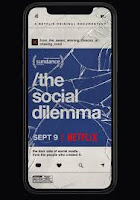
The Social Dilemma: Social Media should be Governed!

 The Social Dilemma, Psychology, Psychoanalysis, Documentary, Movie


The documentary “The Social Dilemma” is a less than captivating film that doesn’t clearly deliver its message, but even a botched delivery job has caught a lot of well-deserved attention.  The message at the heart of the film should have been:  “We are both social creatures who crave connection AND we are anxious creatures who deeply fear the problems that inherently accompany connection.  The Social Media Nerds set out to create an Eden – a social world where we only get good connections.  But it turns out that this turned out to be a feeding feast for predatory advertisers and for predatory idea mongers who happily build worlds that are enthralling and apparently risk free, all the while tipping us into the trap of being addicted to apparently risk free contact that is actually bleeding us dry.” 


The film labors to get the message across in what seems like a very long hour and half of talking heads and a really bad dramatization of this with a suburban family being played like puppets on a string into getting arrested for the protests by the Extreme Center (!).  (Who in the center is Extreme?  Why did they put in a politically correct and therefore oxymoronic set of evil characters – and bleed the characters in the dramatization of what little humanity they might have had at the beginning of the film?)  The writer’s apparently didn’t trust the talking heads to convince us and they thought that seeing this “dramatization” would help us.  Oddly, the image of a lifeless puppet being manipulated by mechanical miscreants is haunting, but the general tenor of the story seems lifeless and unbelievable to me...  


The writers and director, by including this dramatization, don't seem to trust us to apply what is discussed to our own lived experience.  Don’t we know that we are being eaten alive by our devices?  Don’t they think we are horrified by ways in which we have become fractionalized in the last decade?  Don’t they think we would actually resonate more with the graphs and data they present?  Or do they think that would be too nerdy?  That we would turn away from something that is so clearly based on thinking, data, and logic.  Do they think that we need a particular dramatization to bring this to life?


In my own world, I am more than aware of how much work I put into getting readers and how driven I am by writing posts that are likely to draw readers versus those that I know ahead of time will not, but that I am passionate about writing about.  The numbers matter to me way more than I am comfortable with.  I certainly have railed elsewhere about advice I have been given to put more white space in my blogs and make myparagraphs one sentence long so that I can appeal to readers who are on cellphones and don’t want to be troubled to think.  I take some comfort from thinking that the producers and writers of this film believe that we are further gone than I believe us to be – at least at this moment.  I also think that their lack of belief in our ability to track what they are saying – to withstand controversy – is symptomatic of what they fear Social Media is doing to us.  And it may mirror how the speakers built the internet in the ways that they did and the criticisms that they now have of it - and that they are reluctant to articulate as clearly as they might.


A central analogy in this film that is that the capitalist need to continuously expand access to capital – which has driven us to deforest vast stretches of the earth, harmfully burn irreplaceable resources, and voraciously consume scarce minerals – is leading us to taking the same approach to our minds.  As capitalists, we want to inhabit an ever greater quantity of our minds – we want to mine the mind.  The way we do this is to expand the time that we spend with our devices and therefore with the products we would advertise – whether they are commercial or ideological – that we are promoting.


It is not just that our devices are sucking up more time, but the means of mining us are scary.  The greatest fear that we have for our sons and daughters is that some suitor with recognize what is good in them and will pretend to love them – will shower them with attention and affection and gifts – not so that they can live together happily ever after, but so that the suitor can control our child – so that the child will become the puppet of the suitor and vulnerable to being used or enslaved by them.


The human suitor that we fear for our sons and daughters is the toxic narcissist.  The person who is so damaged that they feel they must have the attention of everyone around them or they will be destroyed.  So they sweep others into their maw the way that strip mining cranes suck entire farms into their shovels in a single sweep.


But the predators in the social media drama are not human beings who might come to realize that they are, in fact, dependent on the creatures that they would dominate and control.  The predators in this drama are mechanical – and they have not been curtailed by the moral code written into every one of Asimov’s creatures in I Robot.  The mechanical predators are run by the naked rules of acquisitive capitalism – get more time – this will turn into more advertising clicks which will turn into more revenue.  Behind the capitalists who are seeking more time and clicks stand more capitalists who are happy to pay the revenue because this process has delivered the perfect buyer to their marketing.  They don’t have to buy Super Bowl Ads that have to captivate everyone.  They just have to write an ad to capture the imagination of the used car hobbyist who is looking for a vintage Holley Carburetor.  Not hard to do!  And much cheaper.  All is good – or is it?


The movie points out that the advertising of products (and ideas) should be being regulated by the government.  While they don’t talk about how dysfunctional our government has become, they do point out how the government used to protect children watching Saturday morning cartoons from predatory advertising.  They don’t point out that our government, as it focuses on defense and not education has lost an appreciation of how complicated – and how valuable – it is to create a citizenry that is capable of belonging to a Democratic Society.  And the Social Dilemma of the title can be characterized in part that Social Media is accelerating the failure to adequately protect and socialize our young citizens.  Instead it is promising them fame and power that is unreasonable – and creating a space where the lack of opposition to the ideas of the children prevents them from learning to craft arguments that make sense – and to be reined in when those ideas are too extreme and/or self-centered.


As much as we fear social engagement because it might include others who differ from us and therefore might hurl insults – or spears – in our direction – it is essential that we engage in the process of having our ideas given a trial by fire.  We need to hear opposing positions – in order that we can craft/hone/sharpen (so many of those words bring up images of warfare) our own ideas so that we can attack back – or recognize that it is time for a truce so that we can come up with a compromise solution.


What the talking heads in the movie don’t seem to me to recognize is that this system of Social Media was created by Nerds.  And Nerds have some characteristics that get played out in the Social system they create.  Nerds were not well received, by and large, on the playground (or at least I, as a young Nerd, was not).  But the world of computers is very different.  Computers do what they are told – and, when you tell them nicely and write your code clearly, they do your bidding.  The Nerds – and I don’t mean to be disrespectful – want to create a world that is as responsive as the computer is.


One of the characteristics of Facebook initially was that you could only approve of the posts that your friends put up.  It was to be a place of happy affirmation, with all of your friends “liking” what your posts.  But the computer itself does let you know when the program you have written has bad syntax and.  Similarly, other people do this.  The most loyal reader of this blog, my enthusiastic mother, who taught English for years, points out my syntax errors.  I hate this.  And I am greatly appreciative of it.  Some of the chronic mistakes that I make have changed a bit as a result of her (and the reluctant son) explaining how to spot those errors.  And when she points out that there are multiple errors in a particular post (more than usual), it is useful to go back and edit that post rather than having those errors continue to glare (even though some other readers have had to slog through them – and anything you have had to slog through here is entirely my fault, btw). 


The point here is that social interaction is messy and uncomfortable and difficult.  And I, every bit as much as the next person, wish this weren’t the case, but we can’t constructively engage with other people without risking the possibility of criticism – and thereby allowing the possibility of growth – no matter how painful that might be.  In an adult interaction, people learn to be tactfully responsive in ways that recognize the positive intent, but that also point out our failures to achieve that intent.  They suggest means of achieving success without too deeply wounding the person who is being critiqued – a word that rests right next to criticized. 


The Reluctant Wife has just started watching the new season of The Great British Baking Show.  The feedback that the judges give is direct and clear.  "This tastes good."  "You failed here."  The contestants work both with and against each other.  When they say they are pleased to just to have been on the show, you believe them.   They have been treated with respect, including with the negative feedback – and it is not offered to harm, but as a measure of achievement or lack thereof.  Just this week, sitting in as I sometimes (OK, maybe often) do, we both disagreed with who should have been kicked off the show – but we did agree on who the two to choose between were – and we don’t doubt that both of them would have been gone soon (though I think that my disagreement was the one who left wasn’t teachable and the one who did leave was – unfortunately we’ll only know if that is the case for one of them…).


Social Media has created a monstrous world that is playing on our wishes to be loved, to be a member of a community, and to care about others.  These wishes have been responsible for our rise to the top of the food chain and, when manipulated, have caused us to go to war, to exterminate species and, now, threaten the survival of the species on the planet.  The rules of social engagement – necessary rules that help us constructively engage and allow us to build tremendous works – including the interconnected world that Social Media exploit – have not been applied to Social Media.  This movie, flawed though it may be, makes a much needed and evidence based plea for us to do that. 


We need to be forced, a la the old public service message, to sample things that are outside of our narrow purview.  We need to know that there are other perspectives.  We need to get into the "Artificial" Intelligence and include morality as subroutine.  This will be messy and imperfect.  Sometimes the wrong person will be thrown off the show.  But if we don't take up messy tasks and work on them, we will have far bigger messes on our hands.  This movie articulates a few of them; increased suicide, violent supression of minorities, skewing of our personalities in subtle and imperceptable ways.  As scary as the articulated ones are, I fear there are far bigger ones ahead.  The speakers in this film have taken powerful psychological principles and put them in the hands of ruthless entities with essentially infinite resources to exploit them.  We are thus using our knowledge about ourselves against ourselves in ways that we are not controlling.  A recipe for disaster if I ever heard one.


To access a narrative description of other posts on this site, link here.  For a subject based index, link here. 


To subscribe to posts (which occur 2-3 times per month), just enter your email in the subscribe by email box to the right of the text.

Saturday, October 3, 2020

COVID Chronicles XIII: Ennui


Donald Trump has been diagnosed with COVID and the feeling that I experience is sadness.  I don’t think it is “SAD”, in Trump’s disdainful voice, but sad.  Just sad.  Lance Dodes, a psychoanalyst who has been quite critical of Trump, maintains that Trump is not a politician – and cannot be – because of a mental condition.  Dodes has diagnosed Trump with malignant narcissism, a form of psychopathy that, in Dodes opinion, prevents Trump from being able to empathize with others.  This means that he is incapable of functioning as a politician – because he is incapable of being a functional member of a polis because his concerns are centered only on himself and his own survival.

 This was apparent in the debate this week.  Trump’s tactics, such as they were, were to prevent meaningful speech from occurring.  His extemporaneous speech, as was pointed out to me by an analyst friend, is not a means of conveying thoughts, but a means of acting.  In the debate he was acting to prevent Joe Biden from stringing together coherent words, and he did this by using words as weapons – hurling them at his opponent the way that a kid in elementary school would hurl words – or sticks – at an enemy.  A patient texted me the next day that, “The debated was terrible and scary.”  I had to agree with her.

 Chris Wallace took heat for not managing the debaters better (though combatants may be more appropriate).  One psychiatric wag suggested that someone versed in treating personality disorders should have been the moderator.  The problem with this idea, to go back to the malignant narcissist idea, is that to manage the behavior of such individuals you have to have some sort of leverage over them.  The NYT reports on Trump's finances suggest that the only people who may be able to do this are his creditors.

Trump has belligerently trumpeted his independence and I think this is one reason that we "enjoy" him so much - whether are for or against him, we cannot seem to get enough of him.  Trump believes himself to be above the law.  He can shoot someone on Fifth Avenue and not be prosecuted for it.  He has also, apparently, believed himself to be above the laws of science - both in his failure to address climate change and in his failure to wear masks or to insist that those around him do.

The feeling of sadness rather than something like anger or vindication comes out of a feeling of depletion.  I went to a college reunion some years ago and I was dismayed that one of my favorite teachers talked about the “slog” of the year.  I loved – and idealized – my college experience.  Each week there was new stuff to learn.  I think I forgot that, at a school without semesters but classes that went throughout the year, I would frequently fall behind in the third or fourth week and never quite catch up.  Talk about a slog!

 This year of teaching has been a different kind of slog, though.  We consistently have around thirty or thirty five cases of COVID on campus at any given time.  This is about 5% of the cases in the county, btw.  I’m sure the larger state school across town accounts for an even larger percentage.  Schools are super spreader sites…  And my students know that.  We are meeting in person, at least in theory.  In fact, all of the in person classes are being broadcast on zoom as well – and, at this point, I have two students or so showing up for class in person while the other 20 are online.  Some of them are staying home, I’m sure, because it is easier, but some of them are concerned about becoming infected. 

Teaching to a mixed group in person and on line is terrible pedagogically – the people online, with a very few exceptions, don’t participate very much – they become part of the wall paper – unless I come up with exercises that force them to participate.  OK, this isn’t terribly different than in regular in person teaching.  I have to prod people to participate there, too.  But I can see them and their reactions – the ways that they nod their heads – or turn their noses up – at something I say or that someone else in the class says.  And we can do exercises where we get up and move around the room.  And I’m not wearing a mask…

But more importantly, I think it is the feeling that the slog is shared by the students without the offsetting benefits I used to observe – seeing them standing in knots in the parking lot after class – and joining them for a moment as they connect with each other and enjoy each other’s company.  This is all gone.  I have described it as grim before, and it still is, but it feels increasingly like Groundhog Day (the Movie) in which the same predictable series of events occurs day after day with no end in sight.

 And, of course, it didn’t have to be this way.  Republican bloggers are spouting conspiracy theories because more Republican lawmakers are coming down with COVID than Democrats.  They seem to be overlooking the preventive measures that Democrats tend to take much more frequently than Republicans.  The current buzz is that the event hosted in the Rose Garden to announce the nomination of Amy Coney Barrett to the Supreme Court was a super spreader event.  Was that RGB’s revenge?  Or is it just that irresponsible – apolitical behavior – behavior that doesn’t take into account the impact on the polis – will ultimately affect us all…

Not that I am above irresponsible behavior.  Last weekend, worn out from isolation, the reluctant wife and I went to the local mall just to have some novelty and to think about how we might redecorate the house (since we spend all of our time here – except for the moments I duck out to campus to teach a class or run to the grocery store to get food).  I have no idea how good the air circulation is in the mall, and there were lots of people whose face coverings were haphazard – nose after nose peeking out of a mask.  I am in a two week waiting period to see if I was infected.

 Trump’s diagnosis was a blessing in that it is a reminder, as we are facing isolation fatigue, that this thing isn’t over yet.  We need to continue to be vigilant.  We don’t know what the immediate impact of this illness will be on us individually, and we have no idea yet what the long term effects will be.  Better to be safe(r) than sorry.  Note to self…

I think I feel tired from living in a variety of types of isolation.   Running into people on walks in the neighborhood feels like an opportunity to shout at each other across the street, not to be in touch.  Our regular dinners with close friends are gone – though we do sometimes eat with friends down the street on the porch with distance.  I miss running into other faculty in the halls, and talking before and after various meetings that are now taking place on zoom and that don’t feel spontaneous in the ways they did.  And I miss the illusion that I could meet more people for lunch than I actually do.  Not to mention missing the noontime basketball game.

 And this period of isolation seems to stretch endlessly into the future.  If we have a change of administrations, it feels like we will be working uphill again, as we did when Obama assumed office in the midst of a terrible recession.   This administration has done a good job of destroying a number of tremendously important agencies and initiatives.  Will they be reconstructed just in time for the next administration to destroy them again?  Even more concerning are the existential issues that are looming.  Climate, health care, continuing racial divides.  And the outsized influence that rural voters have on the legislative branch and the electoral college  (Btw, I really don’t understand the anti-science bias of this group – our agricultural preeminence has been driven by science.  The statistics I learned in graduate school and use in my profession were developed by agriculturalists who were invested in increasing crop yields).

This can’t last forever.  Trump's illness might, eventually, cause his supporters to see the light of the importance of prevention (He might even come out in favor of it based on this having happened to him – though I am not betting on that).  In one of the few enlightening moments in the debate, I heard Joe Biden proposing that he would demand (I don’t know if a President can do this) that the federal fleet become all electrically powered.  If that happened, that would establish electric fueling stations all over the country and we could all work on transitioning off of fossil fuels.  That would be a good thing, right?

But a little light in the tunnel does not sweep away all the darkness.  Our great American experiment in self-government – our attempt to throw off the yoke of an oppressive power – is devolving into battles over whose interests should be served.  Can we, before it is too late, realize that we are all in this together?  Or will the self-serving approach to government and living that Trump espouses continue to hold sway?  Of course, there will always be tension between these two poles – we will never resolve this tension completely, but will we, reluctantly though it will necessarily be, realize that, for the good of all, we will have to give up some of our individual freedoms?  That we will have to inhibit our drive for absolute personal power so that we can achieve a greater good?

So, rather than pathologizing Trump, perhaps we ought to, in retrospect (God willing), talk about him as an example of our shared struggle to mature.  And we need to recognize that this is a process that each new generation has to undertake on their own.  We aren't born mature.  We grow to that position.  We learn how to inhibit our worst impulses (and some other ones as well).  We also learn how to act when the time is right.  Individually and collectively, over and over, we have to struggle to get that boulder to the top of the hill - and to try to help our children prepare to do that as well.  We stumble, the boulder rolls back down, but we put our shoulder to it, and work at getting it back up there because the alternative is, as we are seeing, unacceptable.

To access a narrative description of other posts on this site, link here.  For a subject based index, link here. 

To subscribe to posts (which occur 2-3 times per month), just enter your email in the subscribe by email box to the right of the text.


For other posts on COVID:
I:       Apocalypse Now  my first posting on COVID-19.
II:      Midnight in Paris  is a jumping off point for more thinking about COVID.  (Also in Movies).
III:    Hans Selye and the Stress Response Syndrome.  COVID becomes more normal... for now.
VI:    Get back in that classroom  Paranoid ruminations.
VII:   Why Shutting Classes Makes Fiscal Sense A weak argument
XIII: Ennui
XIV. Where, Oh Where have my in-person students gone?  Split zoom classes in the age of COVID.
XVIII.    I miss my mask?
IXX.      Bo Burnham's Inside Commentary on the commenter.


Saturday, September 19, 2020

I’m Thinking of Ending Things – Spoiler Alert – It’s a Dream

 Psychology, Psychoanalysis, Dreams, Psychoanalysis of I'm Thinking of Ending Things, Psychology of I'm Thinking of Ending Things


Charlie Kaufman’s new movie, “I’m Thinking of Ending Things”, is not just structured like a dream – in the way that, as a psychoanalyst, I think most movies are – it is a dream.  I don’t know how else to understand it – and I think understanding it this way helps make sense of what otherwise might appear to be an odd, disjointed and creepy film.  OK, it is still quite creepy when seen as a dream – maybe even more so than when seen in whatever other way you might try to make sense of it – but when seen as a dream, the creepiness is the creepiness of being exposed to the internal workings of a mind that we both admire and also, I think – and here I may be speaking quite personally – pity, but also, again speaking personally, identify with (as uncomfortable as that might be).


I cannot help you make sense of this film without staying very close to the plot – so if you have not seen it, be forewarned, this will spoil it for you.  Or perhaps help you see it more clearly on a first viewing than I was able to.  You will be the judge of that, if you choose to keep reading…


This film starts with a woman standing on a small town street waiting for her boyfriend to pick her up to drive her to visit his parents who live on a farm.  We hear her in voice-over explaining who she is and who her boyfriend is and the quality of their relationship – and that she is thinking of ending things – and she notes that it is odd, when she is thinking of this, to be going to meet his parents.  This lends a certain dreamy quality to the beginning, but I am calling that quality dreamy only in retrospect.  The first time through, it felt more that the character was off-balance.  And we feel off-balance.  We are about to meet someone about whose relationship with this woman we know more than he does.  And they are driving off on a trip that feels doomed from the start.  Why are they bothering to go? 


We think that the character waiting for her boyfriend is a person and this is a movie about going to meet her boyfriend’s parents.  In fact, she is a character in a dream – and weirdly it isn’t her boyfriend’s dream, but the dream of a janitor in a High School in a small town in Oklahoma.  And the janitor is dreaming – or daydreaming – or fantasizing – about being an idealized version of himself that would allow himself to be her boyfriend, and he has created both she and her boyfriend out of the contents of his own psyche – as we all do whenever we create characters that we dream about.  But the genius and disorienting quality of this movie is that it is told from the perspective of a character in the dream.  In a dream, we generally view the dream either from an all knowing position or from ourselves.  In this dream we are disoriented because we are identified not with the dreamer, but with his creation.


So, a bit about Freudian Dream Theory.  Freud’s great insight was that dreams are about fulfilling wishes- by fulfilling wishes, they keep us asleep. When we are kids, we are hungry, so we dream of eating fudge – or whatever we love – and this allows us to stay asleep.  As we age, our needs become more complicated and frequently need to be disguised – because if the person watching the dream were to see what we are really wanting – or really worried about, they would wake in terror or wake to fix the problem in them.  So our dreams become complicated.  We represent things symbolically.   We condense many things into one thing.  And one of the complications is that we frequently represent aspects of ourselves as characters in our dreams.


The uncanny part of this movie is that we discover, along with the girlfriend, that she is just such a character in someone’s dream right along with her.  She starts to realize that she is not who she imagines herself to be – and her character starts to have cracks in it that we see – sometimes just a minute before she does.  In fact, she sometimes seems not to notice some of these cracks – and we can join her in ignoring the parts of the film that don’t hold together until they can no longer be ignored.  We forgive the minor discrepancies – not realizing that they are leading to major discrepancies until much later – one of the reasons that watching this movie twice is satisfying.  We can see what we worked to miss the first time when we see it a second time (or just go back over it in our mind, savoring it like a good meal – or maybe, more aptly, chewing a fruit we are eating that is overripe and tastes both really good and suspect).


One of the things that didn’t make sense early on but that I let go by is that this woman is from an Urban environment and unfamiliar with driving in the country – yet she is picked up from a small town – not a busy Oklahoma City place – and she lives blocks from farm country.  She is a research scientist – before she is a poet and a painter and a variety of other things – researching rabies, but then working in astrophysics?  These things that don’t hang together are held together by our mind as we work to sustain a sense of continuity – in large measure, it seems – for her.  The writer and director – the equivalent of the dream creator in our own mind, has us in his thrall.  But as the anxieties that the dreamer is trying to hide from himself and from us begin to break through the narrative of the dream, the movie (or the dream – I am thinking of them as the same thing) starts to fall apart.


As the movie started to fall apart – and become interesting – because we were watching the film at home, the reluctant wife and I were able to discuss it without bothering people around us.  It felt to us a bit like a Woody Allen Movie, but the dominant feeling was of watching a horror film.  And, as in a horror film, what started to occur was that boundaries started to be transgressed.  This started in the car, when Jake, the boyfriend, would offer a comment that would be related to thoughts that the woman had been voice-overing.  But the pace of transgression picked up when they arrived at his farmhouse and met his parents.


The director used horror film tropes to let us know that transgressions were about to occur – there was tape covering the door to the basement and Jake said it was scary to go down there.  This served to brace us for the kinds of gory transgressions that can occur in horror.  And so we were a bit relieved – and perhaps more tolerant – when the transgressions started to be about time and space.  Jake’s parents, goofy and embarrassing, were the parents of a rural kid who dreamed of something bigger than the farm he grew up on.  When the woman – who is called and answers to a variety of names in the movie – goes up to his childhood bedroom, she discovers some of the elements that would have fueled these dreams.  Videotapes and books, including a book of poetry that contains the poem that she recited in the car as one of her own.  And she, and we, realize that the poem she thought she wrote was one that Jake had read as a teenager – and likely memorized.


We are now in the realm of the uncanny.  This character, Lucy or Lucia, or whatever she is being called at the moment begins to realize that she is a version of Jake – she notices that in one of the pictures on the wall that Jake claims is a picture of him when he was a kid, it is she who is there.  And she says, Jake, that’s not you, that’s me.  But then our attention is drawn away and this discrepancy is not resolved.  In addition to being an idealized version of what a girlfriend would be, this unnamed character is also an idealized version of Jake.


Now this, if we step out of the film for a moment, is a very creepy moment that should give us pause.  In the #METOO movement period, we are rightly objecting to men’s objectification of women.  This art suggests a psychological mechanism that might underlie part of that objectification.  The woman is not just an object of desire – the ideal that we would like to possess – she is the ideal that we would like to be.  We (and here I am channeling my most creepy self) want to be an object of desire.  We want to show off what we know – and to be something even greater than we are. 


Jake is embarrassed that his mom doesn’t know that the Genus edition of Trivial Pursuit is not the Genius edition, and that she doesn’t know that he is not a genius just because he knows all the answers.  He is, he insists, one who puts in the effort – not one who is inspired.  He did not construct himself as an act of self-creation, he glommed himself together from bits and pieces of what other creators have come up with (like most of us).  His psyche is a Frankenstinian monster (and a derivative of the dreamers mind at that) and he, in turn, has dreamed up an ideal version of himself – biologist, chemist, artist, poet, big city person – whom he can admire, be in love with, possess, bring home to his parents; but who, herself, is not real – but the object of his imagination, and she is someone who, like he himself, is made up of bits and pieces of things that he has studied and made his own and possessed along the way.


This is, if we buy into it, a very sad state of affairs.  We want to be something desirable.  We fear that we are not.  We construct ourselves as something desirable – and this Jake, btw, has done an admirable job of doing that – the poetry, the art, the knowledge that he chooses and integrates in this beautiful dream (and surely by now we know that this is Charlie Kaufman’s dream) are lovely.  But they are not his own.  If someone were to love him, how could they not be thinking of ending things?  They would be not in love with the artist, not in love with the poet, but in love with the guy who puts in the effort – and that guy does not value the effort, but the act of creation.  And that guy feels that he, with all the creativity that it takes to craft this beautiful dream, is not, in fact, the artist, but just the grade school guy putting together a collage of other people’s work.  He is a fake and a failure.


And the person who embodies all that he aspires to be – the person that would be his ideal – is but a collage herself.  Of course, the intriguing thing is that we don’t experience her as such – oh, we realize her to be that, and so does she, and it is an uncanny realization, but she continues to have integrity – to be a character – someone that we admire and believe to have her own integrity despite what we are coming to learn about her.


Here, I think the dream is imitating life.  When we fall in love, we partly fall in love with a projection – an idealized other who is a bit of who we, in fact, are, but also a massive amount of who we would imagine ourselves to ideally be – which we project onto the one we would love.  This means that they will inevitably fail us just as this character must fail Jake.  But thankfully the person we fall in love with also turns out to have an internal life of her (or his) own.  And as this person asserts her or himself, we are frustrated that they are not all we imagined them to be, but also intrigued that they turn out to be much more interesting than anyone we would have created on our own – they have depths and unexplored areas that are part of their real selves and that this is part of what has drawn us to them in the first place.


The character in this dream is not just a figment of Jake’s – or the janitor’s – imagination.  She is not just made up of Jake’s videos and books and poems.  She is also made up of the kids that the janitor sees in the halls every day.  The girls who snicker at him and are creeped out by him, and this year’s girl who will be in Oklahoma, which is being produced for the umpteenth time.  And as much as these girls disdain and disregard him, and as much as he avoids them and feels ashamed in their presence, he is drawn to them and learns something about what it means to be human from them.  And even if he can’t use that to inform the way that he forms himself, he can use it to form the creature in his dreams, and she, therefore, has an oddly autonomous quality.  She is greater than the sum of his idiosyncratic collage work.


To put that more concretely, the actress, Jessie Buckley, embodies the character that Charlie Kaufman has dreamed up.  No matter that she is reading his lines, no matter that she is being told how to act by him, she also brings herself to the movie.  In an interview, she states that she decides, in the odd and spooky dinner scene, to play the waitress and clear the dinner table.  We are never – whether we are director, screenwriter, dreamer, or psychoanalyst stuck in his home for months during a pandemic – devoid of the powerful impact of living breathing people who, in all of their own individuality, surprise and enliven us – creating new perspectives from which to view the world and ourselves.


The ending of the movie relies on a metaphor told when Jake and the girl who is thinking of ending things arrive at the farmhouse and, rather than going directly into the house to meet the mother who is waving to them from the window, go around back to the barn.  There they meet the sheep – perhaps a metaphor, I am now wondering, for Jake’s parents – and for all of the people who don’t think about their lives.  And then they go to where the pigs used to be.  Pigs are thoughtful creatures who eat the leftovers from the farmhouse table.  They are no longer there, though.  The family did not check on them for a few days, and maggots had started to eat through their bellies as they lay in the slop at the bottom of the barn.


The janitor, when we finally get to him, after a long and now very dreamy trip, meets up with the pig and it is clear that he, like the pig, has maggots in his belly.  As he nakedly follows the pig through the school while a blizzard swirls outside, we are left to meditate on the self-loathing, the sense of inner rot, that this immensely talented man – Charlie Kaufman – feels for himself.  I am thankful that he has a creative outlet, as we all do, in his dreams – and that there is an additional layer of that in the films, though I am as uncertain about his fate as I have been about Woody Allen’s.  We are fascinated by the exposure of what underlies our being apparently cogent people in a world that our dreams reveal to be far more convoluted than we might appear, and we resonate with this.  But we also wonder about the existential cry that is at the heart of this work of art that reveals so much.  


Does Charlie Kaufman, like Woody Allen’s alter ego in Midnight in Paris, believe himself to be little more than the collector of the detritus of the former greats?  If so, what chance do those of us from the Midwest have of feeling ourselves to be children of God?  But doesn’t this film, like Woody Allen’s oeuvre, demonstrate that there is a solidly beating creative heart within that chest?  Would that Kaufman comes to know that more viscerally and therefore lives a life that is less interpersonally destructive than the one Allen has.  Both men are able to project their inner lives onto a different dream screen than most of us, they project it onto a movie screen.  In the process of becoming auteur do they lose something of the correction that comes from being open to others in their lives?


To access a narrative description of other posts on this site, link here.  For a subject based index, link here. 


To subscribe to posts (which occur 2-3 times per month), just enter your email in the subscribe by email box to the right of the text.


Saturday, September 12, 2020

The Report – Defensive Functioning and CIA Rage

 The Report, Movie, Psychology, Psychoanalysis, Torture


This Saturday, we watched The Report, an Adam Driver film that dropped last year and has been on our list to see, but has never made it to the top our list, I think because of the necessary violence – and the complicity of psychology as a field in this morally heinous chapter in US history – it has not seemed enticing to watch. 

Earlier, on Saturday afternoon, we wanted to get out from under the Covid cloud of isolation, and chose to go on a drive into the country to a local sculpture park.  It was a lovely drive, and This American Life came on the radio.  It was a rebroadcast of a 1998 piece about the Trail of Tears.  I was struck by one of the story teller’s statements – “In a Democracy, the people are responsible for the actions of the government.”

Steeled by this sentiment, we watch the film.  It is violent.  And what we did to people, for no apparent value – the way that we violated the Geneva Convention based on the say-so of two yutz psychologists, as they are presented in this movie, is appalling.  The truth of the matter, especially psychology’s complicity in these actions, is worse than the narrative lets us know.  I have documented aspects of that here, here and here. 

Psychology’s sins are not the focus of this film – it has bigger fish to fry.  What the CIA did to our constitution, what thugs did to people we were trying to extract information from, and how those who were under fire from powerful foes but managed to stay within the lines and to bring something to the light of day is what this film wants us to focus on, and I think those are good foci.  That said, I would also add that a subtle but important aspect is that a driving force behind some forms of evil is the refusal of people to acknowledge that what they are doing simply isn’t working and yet they seem powerless to change that.

In the narrative of this film, the CIA felt they had failed the country by allowing the events of 9/11/2001 to occur. The film then presents evidence that the CIA could, in fact have known, that an attack was coming if they had listened to other agencies.  The CIA, which can think it is a step above law enforcement agencies, rejected intel from the FBI that might have prevented 9/11.  Further complicating this is that FBI agents were gathering intelligence from individuals who ended up being tortured by building relationships with them – the only reliable means of interrogation.  “Enhanced” interrogation (torture) has no evidence to support its use – the CIA gathered none in the process of waterboarding, beating, humiliating, and, in at least one case, killing people who were detained in Guantanamo Bay.  And they disparaged the relationship building that the FBI espoused and that has empirical evidence to support its effectiveness as a means to gather information from hostile combatants.

Wait a minute, you say, isn’t torture illegal?  Yes, is the short answer.  The long answer is that when a mental health practitioner is present to make sure that the person is not harmed, “enhanced interrogation” procedures can be used.  The AMA told the Department of Defense they would not condone torture, as did the Nursing and Social Work associations.  It was only Psychology's APA – and it must be remembered that American Psychologists (and I am one) are dependent on the Department of Defense for training more than 50% of us – and for huge amounts of money for research  - it was we who said “Yes.  Yes, we will ‘oversee’ your torturing of foreigners [wink, wink].”  When I say we, the President of the American Psychological Association as well as past Presidents and the ethics board all signed on.  And we altered our ethics code so that the yutz psychologists, paid 80 million dollars not to watch and protect, but to administer “enhanced interrogation” procedures, could go ahead and do that and remain in good standing.  And our administrative staff denied, stonewalled and gaslit concerned psychologists who thought this might be happening and tried to get to the bottom of what eventually came to light in order to stop or, in lieu of that, to hold ourselves responsible.

OK, that last paragraph was not in the movie (except for the 80 million dollars).  I just had to get it off my chest.  Back to the film…

Adam Driver plays Senator Diane Feinstein’s staffer Daniel Jones – a Harvard grad interested in politics who wants to effect change behind the scenes.  He is well prepared for the job he is assigned – he is directed by Obama’s future Chief of Staff to get some experience with the intelligence community before applying to work as a staffer, and when he joins Feinstein’s staff, she is head of the Senate Intelligence Committee that oversees the functioning of the CIA.  Daniel and five other senate staffers are tasked with reviewing the emails and reports that were generated by the CIA relevant to the “enhanced interrogations” which the CIA credited with preventing many subsequent terrorist actions.


Daniel Jones was the lead author of the 6,700 page eponymous report about the activity.  Watching him work 18 hour days for 5 years to build this report, while one after another other staffer leaves the project, is actually more entertaining (if you want to call it that) than you might imagine.  The discovery of the brutality of the interrogation tactics is accompanied by graphic depictions of them – and they are horrific.  And they yield no useful intelligence.  The CIA is painting the picture that this is a necessary part of their intelligence, but Driver is able to build the narrative of what actually has happened by painstakingly tracing email interactions so that he knows that the CIA is lying about its sources. 


Jones finally finds the smoking gun – the CIA’s own report that shows that torture is ineffective and has produced no evidence.  The film begins and then returns to the moment when Jones steals the document showing that the CIA knew that it was harboring an ineffective but brutal and illegal torture system out of the CIA building but went right on torturing anyway.  Jones illegally has this document in his possession, and the (other) most harrowing part of the film is watching him figure out how to maneuver between revealing this document and the rest of the Report he has written to the media, which would be illegal; pressuring Feinstein to take the report public; being harassed and sued by the CIA; having Obama, who wanted to be a post partisan president, release the report but black everything under the guise of dangerously exposing state secrets; to the final release of the document in a somewhat anti-climactic because long overdue and thus disappointing final moment of the Senate standing up to the Executive branch (will we ever see that again?  Certainly not with the current administration) and reading the report into the Senate record for all to see.


One way of trying to understand this sequence of events is that the CIA was engaged in what psychoanalysts call the repetition compulsion.  To get to this reading, we have to imagine them as traumatized by what they had done to others (this argument would be similar to the Catholic Social Teaching that we should be concerned about the well-being of the college administrators who are “having” to order schools to reopen knowing that this will cause deaths) and, as a result of the consequent “moral trauma” they have to keep doing what they are doing in order to absolve themselves of guilt – as if by continuing to do it they would justify it as a “normal” action.  This is a problematic reading – not just because it is applying the repetition compulsion to the perpetrators of violence rather than to those who have survived it, but also because it requires us to imagine guilt on the part of the CIA.  Even imagining unconscious guilt is pretty tough to do the way that this movie is structured (which is not to rule out the possibility of this having happened in the actual situation being depicted – it is important to note that I am offering an interpretation of the portrayal of the actions of these people, not of the actual people and their actions, though there is assumed to be a reasonable parallel).


A parochial read would be “in for a penny, in for a dollar.”  The idea would be that once the CIA had committed to the program, they would continue because of inertia.  Sort of like when the US continued to escalate the war in Vietnam because of the costs they had already taken on in getting to the point where they were.  I think there is some merit to this position and I don’t doubt that some in the chain of command signed off because of something like this, but I think the movie is pointing at something far more sinister.


The film ends with the usual accounting of where our heroes and anti-heroes have ended up.  As is often the case in a film that exposes governmental or white collar corruption, the bad guys have never paid their debt to society.  In fact, many of the perpetrators have been promoted within the CIA and Trump is in open awe of individuals who tortured.  I think, if memory serves, he has referred to them as “badasses”.  (If you know that he used a different term, please let me know that in the comments below and I will edit this post).


Unlike so many of my other posts, this is not a post about what a bad guy Trump is.  Nor is it about the “basket of deplorables” who voted for him or have served under him.  Despite the fact that I think that Trump would institute torture in a heartbeat if he could figure out how to do it (some of the loopholes have been closed in the wake of this scandal, and I think the APA learned its lesson – we did fire our institutional perpetrators…), that is not how I am thinking of this.


I think that the CIA acts to channel our collective rage – one of the basic motivational systems posited by Panskepp that neuroscientists like Solms are bringing to psychoanalysts’ attention.  This motivational system is intended to destroy frustrating objects in the world.  At the beginning of WWII, when the Japanese bombed Pearl Harbor, our rage was unleashed with terrible consequences.  We experienced aggression from another.


Since that war, our position as the unquestioned power on the world stage has not, until quite recently, been truly in question.  Yes, the cold war was a difficult period.  Yes we were concerned that nuclear proliferation and the spread of communism was an attempt to steal our riches and redistribute them to other nations.  More recently, though, we have experienced ourselves as the dominant world power, while simultaneously feeling that may be slipping – China is rapidly gaining or surpassing us on many measures of wealth and influence.  When we are focused on how wonderful we are while also wondering if we are, in fact, quite all that we are cracked up to be, we are in a position of being narcissistically vulnerable.  So, from that perspective, it makes sense that we elect a leader like Trump who has a narcissistic character structure.  He is mirroring the current national psyche.  The CIA has always been there to protect us from external threats.  When we are functioning narcissistically, it can be very difficult to distinguish between real and perceived threats.


Obviously, Al-Qaida was and is a real threat.  But a part of that threat was narcissistic.  For the CIA, it was that they missed the warning signs.  For the country, it is that “backwards”, ill equipped fundamentalists can expose our vulnerabilities.   They can use our most sophisticated technology against us by simply wielding box cutters.  And part of having narcissistically vulnerable aspects exposed is that this is a direct route to unleashing our rage. 


In this context, the rage is doubled because not only has Al-Qaida exposed our national vulnerability, the Senate has the temerity to expose the CIA’s.  The CIA directs its rage at the Senate – in the form of lawsuits towards the Senate staffer, but perhaps more importantly through the violation of the Senate’s oversight abilities – they break into the Senate’s secure room and steal files from the Senate aids.


The hero in our story, Daniel Jones, responds by sticking to his guns.  He makes good use of advice and figures out how to get very powerful bullies to back off by making them play by his rules rather than playing by theirs.  He asserts the ideal that our friends on This American Live espoused – the individuals making the cross country trek to follow the trail of tears that led their forbearers to Oklahoma -  that we the people – and these Cherokee descendants included themselves in this – are responsible for the actions of our Democracy.


No matter how this coming election is determined, we have a lot of work to do to have our Democracy reflect not just who we are, which I think it will always – and often for the worse – do, but to work towards expressing who we imagine ourselves are capable of becoming.  And much of that work will actually mirror what Trump promised.  We do need to dismantle aspects of our government – aspects where various isms are institutionalized – and we need to quit pretending that those are not ours – but to realize that they are ours, and to rework them, so that they can work for the good of the many, not the few. 


Fortunately there are people like Daniel Jones and the cadre of other staffers not depicted in the film who worked with him and can help us work on these seemingly intractable problems.  Perhaps we are in the process of waking up to these problems and we can constructively work on addressing some of our vulnerabilities rather than simply using them to open the door to rage.


To access a narrative description of other posts on this site, link here.  For a subject based index, link here. 


To subscribe to posts (which occur 2-3 times per month), just enter your email in the subscribe by email box to the right of the text.


Larry McMurtry’s Lonesome Dove: The Wild West and Mortality

 Lonesome Dove Novel, Psychology, Psychoanalysis, Character, Prejudice, The American Dream,  The reluctant son and his steady were reading...